University of South Carolina
Art as a Form of Communication
Key Insight #2
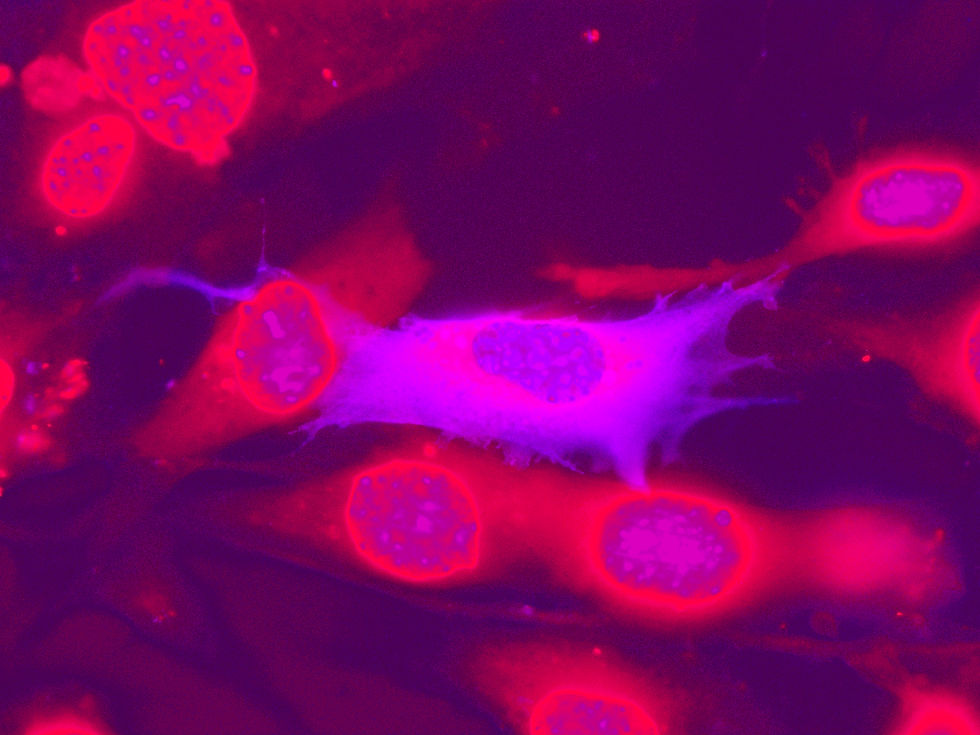
"Curie" (2017) This is one of the photos from my art series "The Universe Under a Microscope" named after Dr. Marie Curie.

This image is from Museums and Advocacy Day 2019 where my Honors College class SCHC 425 was able to meet with Lydnsey Graham and discuss with him and his aids the importance of funding museums in South Carolina.
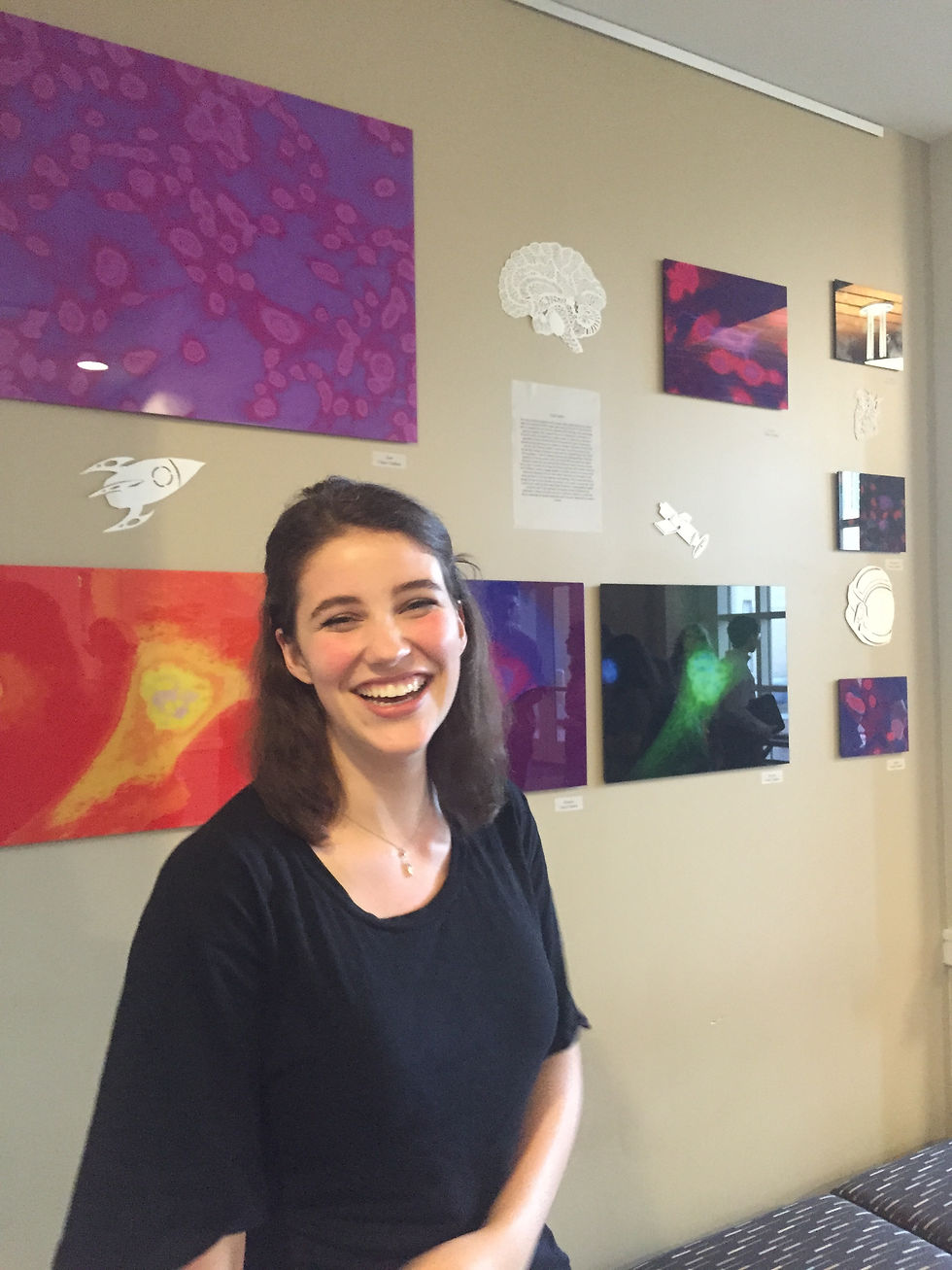
Artist in Residence Showcase 2018 at the USC Honors College Residence Hall
"Curie" (2017) This is one of the photos from my art series "The Universe Under a Microscope" named after Dr. Marie Curie.
When people think about art cancer isn’t the first thing that comes to mind, but from what I’ve come to understand, these two intrinsically different subjects can be combined into an effective form of communication. There are no entry-level requirements to view a piece of art as it can take years of studying to be able to understand ovarian cancer. Upon this observation, I discovered how art can be used to educate others about scientific research. To translate the past three and a half years of my undergraduate research, into layman’s terms for those without a scientific background has been a challenging hurdle to overcome. Not only is it important for the general populace to understand current strides in ovarian cancer research as these may affect them and their family’s health; it is also an important endeavor so that both constituents and lawmakers may learn how and why they should support this research. A multitude of different mediums can be used to convey a story, and each viewer can have their own personal experience with the piece of art that helps them relate better to the subject. I believe that it is through this way that science may be translated into a more interpersonal form of communication. Healthcare and scientific research are both loaded topics, so that even those who have jobs in those fields have difficulty wading through them--let alone the patients their work directly affects. The Universe Under a Microscope art project I developed through the Artist in Residence Program is where I believe researchers and patients can both meet and have that exchange of facts and personal experiences to increase scientific literacy in the general population.
Combining two of my passions in college, that at first glance do not appear to be correlated, has allowed me not only to understand my research better but also to reflect on those who are directly impacted by it. This process was not simply printing off my images taken at the microscope; art requires a deeper meaning in order to provide context and draw the viewer in and create a personalized experience. I was able to fund this project through the USC Honors College Artist in Residence Program during the 2017-2018 cycle. Being accepted into this program did not simply include being awarded $750 for the project; it also included monthly update meetings with the other artists and program directors as well as a one-on-one meeting with Dr. Ed Sanchez in order to round out the feasibility of the project as well as its message. Since the research in the Pittman Laboratory impacts female patients, I wanted to find a way to include women in my project as well. I began to think of all the ways women have affected my life and journey to become a pre-medical undergraduate researcher and that is when I came up with how to name all the different art pieces. I decided each photograph would be named after a different female scientist who were either historically significant to the progress of science or women in my life who have shaped me as the scientist I am today. The historical scientists that I selected were Hypatia of Alexandria, Dr. Marie Curie, Dr. Rosalind Franklin, and Dr. Barbra McClintock. The two personal selections that I choose were Dr. Nicole Reilly and my own mother, Lana Hatt. Eventually, I was also approached by the Office of Undergraduate Research to publish in the 2019 CARAVEL edition about creating such an artistic endeavor. This project been beneficial towards my personal and professional development as it has also led me to come into contact with patients and their family members directly impacted by ovarian cancer research such as mine. Meeting those who can relate the most to my art work on a personal level was an extremely motivating factor for me to continue my studies into the field of healthcare. When presenting at Discover USC 2018 (1st place in Arts and Humanities), one the judges for my Universe Under the Microscope display was a cancer survivor herself. I was deeply moved after she told me her own story with breast cancer and when I presented at NCUR 2018 I was also confronted by someone at my exhibit who had a family member die of ovarian cancer. To me, this demonstrates that not only can this project educate others about current research in cancer but it can also help survivors find beauty in something that completely overturned their lives.
A course that I am currently taking during Spring 2019 has been helping me to compile all of the factors of this art project to understand as well as its overall importance for public knowledge. This course also has its students participate in Museum and Advocacy Day in Washington D.C. as well as current advocacy policy issues to present in class and on the Hill. Museums and Advocacy (SCHC 425) is structured around the discussion of public, historical sites and their importance to humanity overall. How do these places fit in and out of their own historical context? What is their role in society? Should that be contested? Reformed? The discussions in this course, led by a different student each day on their own selected site, are very thought provoking. The sites themselves range from formal museums (such as The Canadian Museum of Museum at Pier 21) to contemporary advocacy sites still in development (such as the PULSE Night Club in Orlando, Florida). Many times we ask ourselves: how can an educational component be introduced into these sites (especially those with sensitive topics), and how can we create an appeal for all ages to come and see the exhibits? I believe that the use of art exhibits to express emotions related to the diagnosis, prognosis, and treatment of ovarian cancer provoke the viewer to think about the research that contributes to that process on a personal level. Art has the means to reach a massive audience, no matter what medium it is in, and that is how I have come to view “The Universe Under a Microscope”; combining historical events, art, and colors to evoke an emotional and thought provoking response. This macroscopic analysis of the museums and advocacy in America and around the world lead me to apply for the Foley Thesis Project grant in order to further develop my Artist in Residence exhibit into a more permanent project on campus.
When I began my undergraduate career four years ago I would not have thought that I would have developed an art project out of ovarian cancer research, yet creative expression has always played a large role in my life. My hope is that the lessons learned from this art project don’t just end with me, but can extend to others beyond my field of research and social network. Overall, I have learned that sometimes the best forms of communication aren’t always the most obvious. Using cross-disciplinary learning strategies physicians can better understand patients, patients can better understand the research, and researchers can communicate more efficiently with a public that has a low scientific-literacy. When we look closely enough we can see the universe everywhere, even under a microscope, and it is my desire for many people to understand this phenomenon. It is my conviction that my project carries a profound message. The more attention The Universe Under a Microscope can receive, the more I believe in the impact and effectiveness that cross-disciplinary education can have on scientific literacy rates in America.